

Most homeowners think procurement means calling three contractors and picking the best price. That approach is exactly how renovations spiral into delays, budget overruns, and disputes. Procurement in renovation projects is actually the end-to-end process of sourcing and contracting supplies, services, and construction works so your project can be executed properly. When you understand this distinction, you gain real control over your renovation. This guide walks you through every stage so you can plan confidently, compare bids fairly, and sign contracts that actually protect you.
Table of Contents
- What is procurement in renovation projects?
- Procurement models: Choosing your approach
- Private sector procurement: Steps and best practices
- Public procurement for renovations: What changes?
- Avoiding pitfalls: Practical procurement advice
- What most guides miss about procurement in renovations
- How justRenovate.it simplifies procurement for your renovation
- Frequently asked questions
Key Takeaways
| Point | Details |
|---|---|
| Procurement is a process | It covers sourcing, bidding, and contracting—not just choosing any builder. |
| Model choice matters | The type of procurement model you adopt affects control, speed, and risk. |
| Documentation reduces risk | Use clear contracts, milestone payments, and defined scope to protect your project. |
| Public vs. private rules | Public procurement in Poland follows strict laws and thresholds; private projects are more flexible but should use best-practice steps. |
| Avoid procurement pitfalls | Careful planning, detailed scope, and verified contractors help prevent costly mistakes. |
What is procurement in renovation projects?
With the confusion set aside, let's define exactly what procurement means in this context.
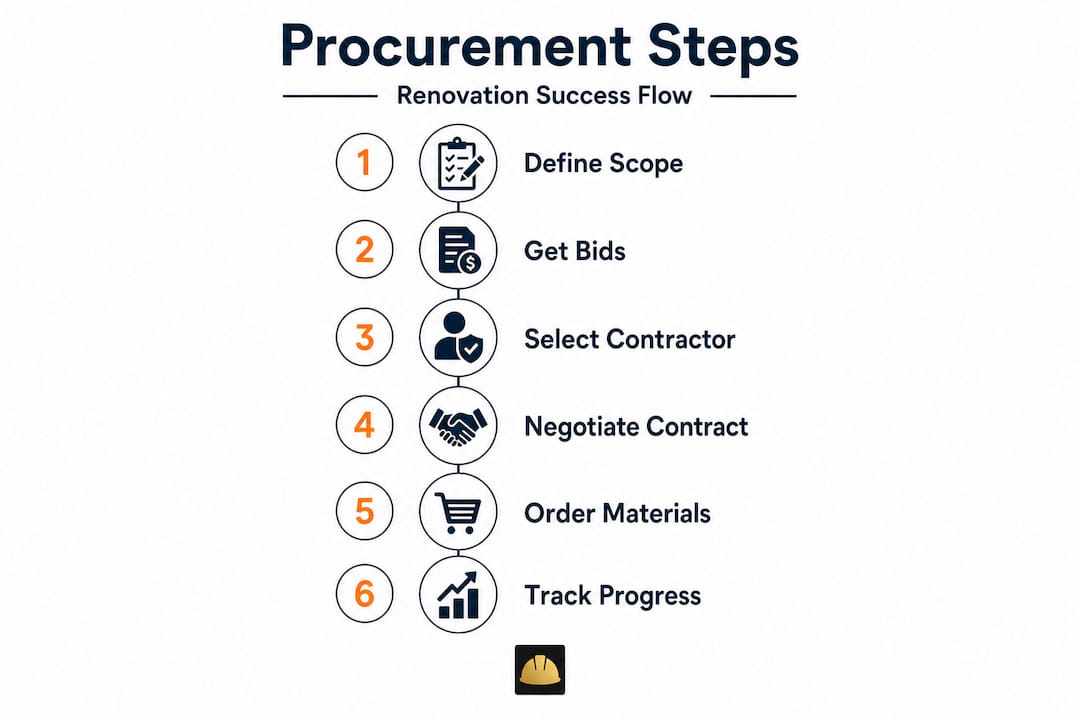
Procurement is not a single phone call or a handshake deal. It is a structured sequence of activities that begins before a single tile is removed and ends only after the final invoice is paid. The process covers everything from defining your project scope and requirements, to gathering bids, evaluating contractors, negotiating terms, signing contracts, managing deliveries, and closing out the work.
Think of it as the backbone of your renovation. Construction procurement means sourcing and contracting the supplies, services, and construction works needed to get the job done, often organized into bid packages for different trades or phases. When this backbone is strong, everything else aligns. When it is weak, costs creep and schedules collapse.
Here is what a complete procurement process typically covers for a residential renovation:
- Scope definition: Writing down exactly what work needs to be done, room by room, trade by trade
- Budget setting: Establishing realistic cost targets before you approach any contractor
- Bid package preparation: Creating a clear description of work so every contractor prices the same scope
- Market engagement: Reaching out to multiple qualified firms and requesting formal quotes
- Bid evaluation: Comparing offers on price, timeline, experience, and references, not just cost
- Negotiation and award: Agreeing on terms and selecting the winning contractor
- Contracting: Putting the agreed scope, schedule, and payment milestones into a written agreement
- Delivery management: Overseeing materials, work quality, and progress against milestones
- Closeout: Final inspections, snag lists, and payment release
"Good procurement does not just find a cheap contractor. It creates the conditions for a contractor to succeed, on your terms, with your budget, on your timeline."
Using a proper renovation checklist at the start of procurement helps you build a complete scope and avoid missing critical work items that later become expensive surprises.
Procurement models: Choosing your approach
Now that we know what procurement is, how you structure it makes a big difference. Here's how the main procurement models stack up.
Renovation projects can use different contracting structures such as Design-Bid-Build, Design-Build, CMAR (Construction Management at Risk), and IPD (Integrated Project Delivery). Each model places risk, control, and cost differently. Choosing the wrong one for your project type is one of the most expensive mistakes you can make.
| Model | Owner control | Risk level | Speed | Best for |
|---|---|---|---|---|
| Design-Bid-Build | High | Medium | Slower | Complex projects needing competitive bidding |
| Design-Build | Lower | Lower for owner | Faster | Simple renovations, tight timelines |
| CMAR | High | Shared | Medium | Medium-to-large projects with budget sensitivity |
| IPD | Collaborative | Shared across all | Variable | Large, complex multi-party projects |
Design-Bid-Build is the classic waterfall approach. You finalize the design, then bid it out, then build. You get competitive pricing because contractors bid on an identical, complete scope. The trade-off is time: the sequential phases take longer to complete.
Design-Build combines the design and construction under one contract. This speeds things up and creates single-point accountability. But you give up some control over design decisions once the contract starts, and comparing bids is harder because contractors will interpret the brief differently.
CMAR brings a construction manager on board early, during design. This gives you cost feedback before the design is locked and reduces the chance of expensive surprises. It works well when you have a solid budget and want professional oversight without giving up design control.

IPD is a fully collaborative model where owner, designer, and contractor share risk and reward. It is rare in residential renovations in Poland but increasingly common in larger commercial refurbishments.
Pro Tip: For most Polish homeowners renovating an apartment or house, Design-Bid-Build through a structured auction-based procurement platform gives you the best combination of competitive pricing and clear documentation. It forces contractors to price the same scope, making comparison genuinely meaningful.
Private sector procurement: Steps and best practices
With the right model in mind, here's exactly how Polish homeowners and private developers can master procurement on their own projects.
A successful private procurement process follows a clear sequence. Skipping steps or rushing any phase is where most homeowners lose control of their renovation. Here is the full workflow:
- Define your scope in writing. Describe every piece of work in detail. Vague descriptions like "renovate the bathroom" lead to wildly different bids and disputes later.
- Set your budget before you receive bids. Know your ceiling so you can evaluate offers realistically, not reactively.
- Prepare a bid package. This includes the scope document, floor plans if available, technical specifications, and any material preferences.
- Invite at least three qualified contractors. More bids give you better market data and stronger negotiating leverage.
- Evaluate bids on multiple criteria. Price matters, but so does the breakdown of robocizny (labor) vs. materiałów (materials), timeline, warranty terms, and references.
- Conduct reference checks. Call previous clients. Ask about delays, budget adherence, and communication quality.
- Negotiate and award. Clarify scope gaps, agree on final pricing, and confirm the timeline before signing.
- Sign a written contract. This is non-negotiable. A solid contract includes scope, schedule, payment milestones, cost, penalties for delays, and warranty terms.
Best practices for renovation bidding emphasize comparing bids carefully and not choosing solely on the lowest price, then formalizing the award in a written contract with clear deliverables and payment milestones. This is practical advice that saves homeowners money in disputes.
Here is an example of a sensible milestone payment structure for a kitchen renovation:
| Milestone | Payment % | Condition |
|---|---|---|
| Contract signing | 10% | After both parties sign |
| Site preparation complete | 15% | On-site inspection passed |
| Rough-in work done | 25% | Plumbing, electrical verified |
| Tiling and fitting complete | 30% | Visual and functional check |
| Final handover | 20% | Snag list cleared, warranties received |
Pro Tip: Never pay more than 10 to 15 percent upfront. Contractors who demand 50 percent before work starts are a red flag. Milestone payments protect you because money only moves when real, verified progress has been made.
Aligning material lead times with construction phases is also critical. If tiles are ordered late, tilers sit idle and your schedule slides. Build a simple procurement timeline that maps material delivery dates against construction milestones so nothing blocks progress.
For guidance on choosing reliable firms and understanding what to include in formal agreements, having detailed contract templates adapted for Polish renovation law is a major time saver.
Public procurement for renovations: What changes?
If your renovation project involves public funds or partners, the procurement rules change substantially.
Public sector renovation procurement in Poland operates under a completely different legal framework. Public renovation work in Poland is governed by the Public Procurement Law (Prawo Zamówień Publicznych, PZP), and specific procedures are triggered based on the estimated contract value.
Here are the core differences private owners should understand if they interact with public procurement:
- Value thresholds matter. Below certain financial thresholds, simplified procedures apply. Above them, full formal tendering rules kick in, including mandatory publication and longer timelines.
- Transparency requirements. All above-threshold tenders must be publicly advertised. Results must be published. This is not optional.
- Equal treatment of bidders. Criteria for awarding contracts must be objective, pre-announced, and applied consistently to all bidders.
- Mandatory documentation. Every stage of the procurement process must be formally documented, from the specification to the award decision.
- Appeals and review. Unsuccessful bidders have the right to challenge award decisions, which can delay projects significantly.
Electronic procurement in Poland is now mandatory for above-threshold procedures, with submission via official electronic portals and publication requirements using BZP (Biuletyn Zamówień Publicznych) and EU portals.
Key statistic: Poland processes tens of thousands of public procurement contracts annually. For renovation and construction categories, delays caused by inadequate procurement preparation are among the most common reasons projects exceed their approved budgets.
Private homeowners typically encounter public procurement rules when they own a heritage-listed property, receive any EU co-financing, or are involved in a housing cooperative or condominium board renovation. In those cases, even private parties may need to follow PZP procedures. Browsing active public tenders helps you understand what competitive, well-structured procurement looks like in practice, even if your project is fully private.
Avoiding pitfalls: Practical procurement advice
To get the most from your procurement process and avoid expensive headaches, here's what most people miss.
Procurement failures in renovations almost always trace back to a small set of repeatable mistakes. Knowing them in advance lets you design your process to avoid them entirely.
Common pitfalls to watch for:
- Vague scope documents. If your bid package says "repaint the living room," different contractors will price completely different amounts of work. Specify surface area, number of coats, primer requirements, and paint quality.
- Single-source bidding. Getting only one quote means you have no market reference. You cannot know if the price is fair, and you lose all negotiating leverage.
- Skipping reference and credential checks. A contractor's Google rating and verified portfolio are not enough. Call actual clients. Ask direct questions about timeline adherence and dispute resolution.
- Ignoring material lead times. Ordering materials after work starts is a common cause of costly idle time. Build your procurement timeline backwards from your planned completion date.
- Releasing payment without inspections. Paying for a phase before verifying the work is complete removes your main financial lever for getting issues fixed.
Expert procurement guidance is clear: procurement means precisely defining scope, aligning material lead times with construction scheduling, and using milestone-based payments to reduce delivery risk. It is a disciplined process, not an ad-hoc conversation.
Pro Tip: At the contracting stage, always include a clause specifying what happens if materials are unavailable or prices change significantly. Supply chain disruptions have affected Polish construction markets, and having a pre-agreed escalation clause saves you from renegotiating under pressure mid-project.
One more safeguard: build a formal change order process into your contract from day one. Any change to scope, timeline, or materials must be documented in writing, priced, and approved before work starts. This single practice prevents scope creep better than any other tool available to homeowners.
What most guides miss about procurement in renovations
Having covered the detailed steps, let's cut through the industry jargon and share what really matters.
Most procurement guides focus on paperwork. They tell you to get contracts signed, keep records, and document everything. That advice is correct, but it misses the most important lever you have as a homeowner: the design freeze point.
How you structure bids and contracts directly affects how much design is frozen before a contractor starts pricing. This in turn drives the likelihood of change orders, schedule risk, and how cost and risk are allocated between you and the contractor. In other words, the moment you lock your design is more financially consequential than anything you put in the contract afterward.
Here is why this matters in practice. If you start requesting bids before your design is finalized, contractors will price assumptions, not actuals. When your real decisions arrive (the floor tile is more expensive, the layout changed, the window size shifted), those become change orders. Change orders are almost always priced at a premium because the contractor has leverage once work is underway.
The homeowners who consistently stay on budget are not necessarily the ones with the best contracts. They are the ones who froze their design completely before a single contractor submitted a price. They made every material selection, confirmed every dimension, and resolved every design question before entering the market. Then they competed contractors on an identical, fixed scope.
This approach takes discipline and patience upfront. But it shifts the entire risk dynamic. Instead of discovering cost surprises mid-renovation, you surface them during design, when changes cost almost nothing. Your renovation contracts in Poland become a formality that confirms what you already know, rather than a document trying to manage uncertainty that was never resolved.
Process protects you more than paperwork. Freeze your design. Then bid it.
How justRenovate.it simplifies procurement for your renovation
If you're ready to streamline your own renovation procurement, here's where technology meets expert support.
JustRenovate.it was built specifically for Polish homeowners and developers who want a fair, transparent, and structured procurement process without the complexity of managing it from scratch. The platform uses AI to help you define your renovation scope precisely, then connects you with verified construction firms (each rated 4.0 or above on Google) who compete in a structured auction to win your project.

You get detailed, itemized bids that separate robocizny from materiałów, making it easy to compare offers on substance rather than just total price. Everything is free for project owners. Firms pay a commission only after the project is completed and you confirm satisfaction. You can explore current public tenders for reference or go straight to posting your renovation project to receive competitive bids from qualified firms across Poland. Procurement does not have to be complicated. It just has to be done right.
Frequently asked questions
What is meant by procurement in renovations?
Procurement is the structured process of sourcing, selecting, and contracting all materials, services, and labor needed to execute a renovation project. As defined in construction guides, it covers everything from initial scope definition through to final contract closeout.
How does procurement differ for public vs. private renovation projects in Poland?
Private projects are flexible but should follow best practices for bidding and contracting. Public renovation procurement is governed by the Public Procurement Law (PZP), with mandatory procedures, publication requirements, and value-based thresholds that trigger formal tendering rules.
What is a procurement model, and which is best for small renovations?
A procurement model is the structure used for awarding and managing contracts. Common models include Design-Bid-Build, Design-Build, CMAR, and IPD. For small renovations, Design-Build is often faster and reduces owner risk, while Design-Bid-Build gives more competitive pricing control.
What should a renovation procurement contract include?
Every renovation contract should specify scope, a realistic schedule, milestone-based payments, total cost, penalties for delays, and warranty terms. Strong contracts also include a formal change order process so any scope modifications are priced and approved in writing before work starts.
How do electronic procurement and tender publication work for public projects in Poland?
Electronic submission is mandatory for above-threshold public procedures, using official portals. Results must be published through BZP (the Polish Public Procurement Bulletin) and, for EU-threshold contracts, through European publication channels.