

Choosing the right renovation contract in Poland can feel overwhelming, especially if you've never navigated Polish construction law before. A poorly written contract is one of the most common reasons renovations go over budget, miss deadlines, or end in disputes. The good news is that Polish law provides a solid legal framework for construction agreements, including publicly available model templates grounded in the Polish Civil Code. This article walks you through the key elements every contract must include, compares your main options, and gives you practical guidance to protect your project from day one.
Table of Contents
- What makes a good renovation contract in Poland?
- Model contract template: Polish Civil Code sample
- Comparing contract types: Individual, model, and custom agreements
- Situational recommendations: Choosing the right contract for your renovation
- A perspective you don't hear: Why most contract issues in Poland start before renovation begins
- Find the best renovation contract and quotes with justRenovate.it
- Frequently asked questions
Key Takeaways
| Point | Details |
|---|---|
| Model contracts simplify planning | Polish Civil Code templates provide reliable starting points for renovation agreements. |
| Customize key details | Always adapt templates to your exact renovation scope and payment preferences. |
| Compare contract types | Understand the pros, cons, and ideal use cases for standard versus custom renovation contracts. |
| Thorough review prevents issues | Careful review and clear negotiation before signing protects you from disputes later. |
What makes a good renovation contract in Poland?
After previewing what you'll learn, let's focus on what a solid renovation contract must include by law and in practice.
A renovation contract in Poland is not just a formality. It is a legally binding document that defines the rights and responsibilities of both you and the contractor. When something goes wrong, and sometimes it does, the contract is the first place anyone looks. Getting it right from the start is the single most effective way to protect your investment.
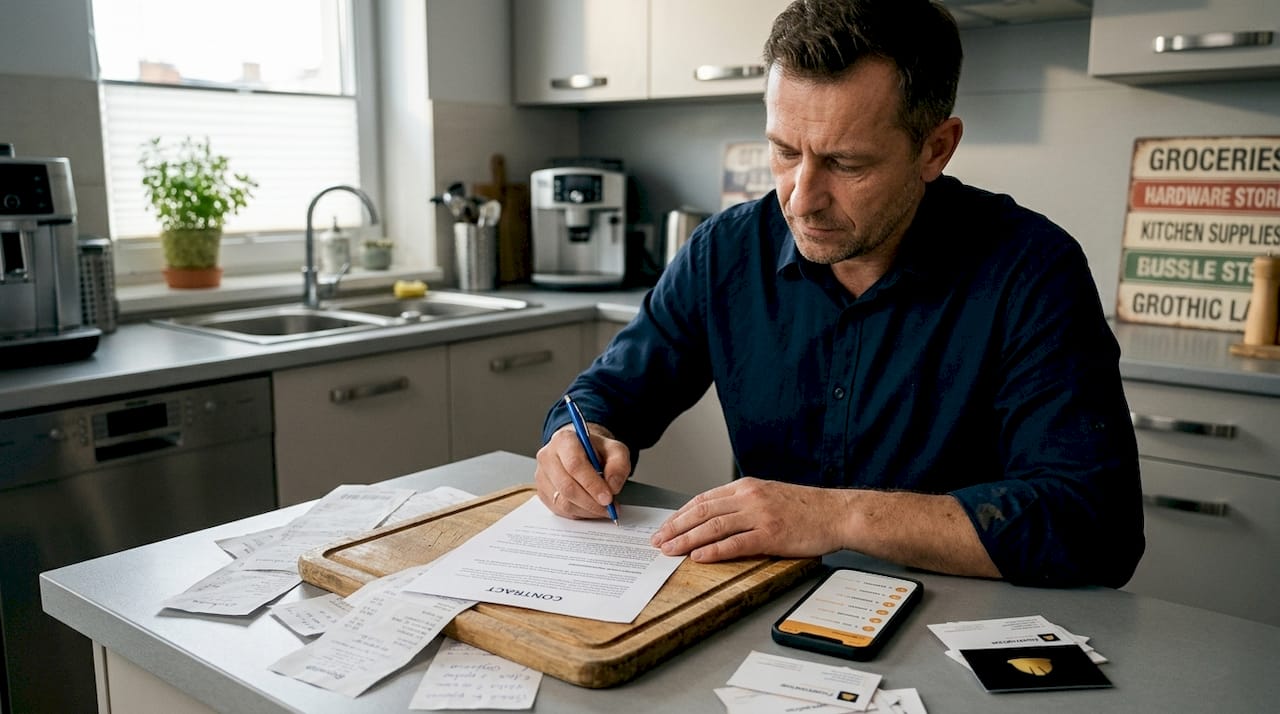
The umowa o roboty budowlane (contract for construction works) regulated under Polish Civil Code Article 647 sets the standard. It defines the parties' obligations, site handover, project provision, acceptance procedure, and payment terms. These are not optional extras. They are the legal backbone of any serious renovation agreement.
Here are the core elements every reliable renovation contract in Poland should contain:
- Parties to the contract: Full legal names, addresses, and identification numbers (PESEL or NIP) for both the homeowner and the contractor.
- Scope of work: A precise, written description of all tasks to be performed. Vague language like "general renovation" is a red flag.
- Design documentation: Reference to any approved plans, technical drawings, or specifications that the contractor must follow.
- Payment terms: Total price, payment schedule (milestones or installments), and the method of payment.
- Timeline: Start date, key milestones, and a clear completion date with consequences for delays.
- Site handover: When and how the contractor takes possession of the site, and what condition it must be in.
- Acceptance criteria: How the finished work will be inspected and approved, including who signs off.
- Warranty terms: Duration of the guarantee and what defects are covered, which under Polish law is typically at least two years for construction defects.
Common pitfalls include missing obligations for subcontractors, unclear scope that allows contractors to charge for "extras," and payment terms that don't tie to actual progress. A contract without milestones, for example, can leave you paying for work that hasn't been done yet.
"A contract that looks simple on the surface often hides the biggest risks. The fewer details it contains, the more room there is for disagreement later."
Pro Tip: Always reference Article 647 of the Polish Civil Code when drafting or reviewing your contract. It gives you a legal baseline and signals to your contractor that you know your rights. You can also use the renovation checklist for Polish homeowners to cross-check that your contract covers every phase of your project.
Model contract template: Polish Civil Code sample
With the essentials covered, it's time to see what a model contract looks like in Poland and how it's structured for your renovation.
The publicly available umowa o roboty budowlane acts as a baseline with sections for responsibilities, documentation, and payment. It is widely used because it reflects the requirements of the Polish Civil Code and provides a logical, tested structure that both parties can understand.
Here is how a typical model contract is structured, and what each section means for your renovation:
| Section | What it covers | Why it matters |
|---|---|---|
| Parties | Names, addresses, tax IDs | Establishes legal accountability |
| Subject of the contract | Description of works and reference documents | Defines what you're actually paying for |
| Contractor obligations | Timelines, materials, subcontractors | Sets performance expectations |
| Investor obligations | Site access, payment schedule, approvals | Clarifies your responsibilities |
| Handover and acceptance | Inspection process, sign-off procedure | Protects you from accepting substandard work |
| Payment | Total amount, installment schedule, invoicing | Prevents financial disputes |
| Warranty and defects | Guarantee period, defect reporting | Gives you legal recourse after completion |
| Termination clauses | Conditions for ending the contract | Protects both parties if things go wrong |
To use this template effectively, follow these steps:
- Download the official template from the publicly available source and read it in full before making any changes.
- Fill in all party details accurately, including NIP numbers for VAT-registered contractors.
- Attach a detailed scope of work as an annex. This is where you list every task, material specification, and quality standard.
- Define payment milestones that align with actual work stages, not arbitrary dates.
- Add a penalty clause for delays, specifying a daily rate (kara umowna) that applies if the contractor misses the agreed completion date.
- Have both parties initial every page and sign the final version in duplicate.
The limitation of using a generic template without adjustment is real. A standard model contract does not account for the specific complexity of your project. A bathroom retile is very different from a full structural renovation. If you use the same template for both without customization, you are leaving gaps that could cost you later. Accessing official contract templates for renovations through a trusted platform can help you start with a version that is already tailored to common Polish renovation scenarios.
Comparing contract types: Individual, model, and custom agreements
Having seen a real model template, it's useful to compare how it stacks up against other contract options you might encounter.
Not all renovation contracts are created equal. In Poland, you will typically encounter three types: individual agreements written from scratch, model (template) contracts based on the Civil Code, and fully customized contracts drafted with legal assistance. Each has its place, and choosing the wrong one for your situation can create unnecessary risk.
Model agreements offer a legally grounded starting point, but customized clauses can better fit complex renovations. Here is how the three types compare:
| Contract type | Best for | Pros | Cons |
|---|---|---|---|
| Individual (verbal or informal) | Very small, low-cost jobs | Fast, no paperwork | No legal protection, high dispute risk |
| Model template | Standard renovations, mid-range budgets | Legal baseline, widely understood | May miss project-specific details |
| Custom (lawyer-drafted) | Large, complex, or high-value projects | Fully tailored, strongest protection | Higher upfront cost, takes more time |
Key considerations for each type:
- Individual agreements are common in Poland for small jobs like painting a room or fixing a floor. They are fast and informal, but if a dispute arises, you have almost no legal recourse. Avoid them for anything involving significant money or structural work.
- Model template contracts are the right choice for most standard home renovations. They are legally sound, easy to understand, and widely accepted by contractors. The key is to customize them with a detailed scope of work and project-specific terms.
- Custom contracts are worth the investment for large-scale renovations, heritage properties, or projects involving multiple contractors. A lawyer familiar with Polish construction law can add clauses that protect you in ways a template cannot.
Pro Tip: Even when using a model template, discuss potential customizations with your contractor before signing. A contractor who refuses to negotiate or add specific terms to a standard contract is a warning sign. You can explore standard contract forms for renovation and see how automating renovation contracts can simplify the process significantly.
Practical scenarios to guide your choice:
- Painting and decorating: A simple model template is more than enough, provided you attach a room-by-room scope.
- Kitchen or bathroom renovation: Use a model template with customized payment milestones and a clear materials list.
- Full apartment or house renovation: Consider a custom contract, especially if the total budget exceeds 50,000 PLN or involves multiple trades.
- Structural changes or extensions: Always use a custom contract reviewed by a legal professional.
Situational recommendations: Choosing the right contract for your renovation
Now that you understand your options, here's how to choose and use the best contract for your project.
Matching your contract to your renovation scope is not complicated, but it does require honest assessment of what you are planning. The umowa o roboty budowlane model contracts give clarity but may need adjustment for complex projects. Start by asking yourself: how much is at stake, how many contractors are involved, and how detailed is the scope?
Example 1: Basic kitchen update You are replacing cabinet doors, installing a new countertop, and repainting. The budget is around 8,000 PLN. A model template contract with a one-page scope annex is perfectly adequate. Focus on payment terms (pay after completion, not before), a clear timeline of two to three weeks, and a simple warranty clause.
Example 2: Full-home restoration You are renovating a 90-square-meter apartment from top to bottom, including electrical, plumbing, flooring, and plastering. The budget is 120,000 PLN and you have three separate contractors. Here, a custom contract for each contractor, with clearly defined interfaces between trades, is essential. You also need a project manager or a lead contractor who takes responsibility for coordination.
Red flags to watch for in any contract:
- No fixed price or an open-ended "cost plus" arrangement without a cap
- Payment schedule that requires large upfront payments before work begins
- Missing completion date or vague timeline language
- No warranty clause or a warranty shorter than two years
- Scope of work described in general terms without specific materials or standards
- No clause defining how disputes will be resolved
Signs of a good contract:
- Detailed, itemized scope of work attached as a signed annex
- Payment tied to completed and inspected milestones
- Specific penalty clause (kara umowna) for delays
- Clear acceptance procedure with a written sign-off requirement
- Warranty of at least two years with a defined defect reporting process
Steps to review and negotiate contract terms confidently:
- Read the entire contract before your first meeting with the contractor.
- Write down every question or concern and bring them to the negotiation.
- Never accept verbal promises. If it matters, it must be in writing.
- Ask for an itemized quote (kosztorys) and attach it to the contract.
- If the contract is long or complex, spend a few hundred PLN on a legal review. It is cheap insurance.
- Sign only when you are fully satisfied with every clause.
A perspective you don't hear: Why most contract issues in Poland start before renovation begins
Here is something most guides won't tell you: the contract itself is rarely the real problem. Most renovation disputes in Poland trace back to decisions and conversations that happened before anyone picked up a pen.
The most common scenario goes like this. A homeowner finds a contractor through a recommendation, has a few phone calls, agrees on a rough price, and then signs whatever contract the contractor provides. The contract might look fine on the surface. But the scope was never properly defined, the payment schedule was not tied to real milestones, and nobody discussed what happens if materials cost more than expected. When problems arise, the contract cannot save you because the real agreement was never properly documented.
What matters more than template selection is the quality of your scope of work. A detailed, written scope is the foundation of any good contract. It should list every task, every material specification, and every quality standard. If your scope is vague, no contract template in the world will protect you.
Milestones matter just as much as deadlines. A completion date tells you when the work should end. Milestones tell you whether the project is on track week by week. Build them into your contract and tie payments to them. This gives you leverage and gives the contractor a clear roadmap.
Don't skip negotiation, even with a model template. Many homeowners feel uncomfortable pushing back on a contractor's proposed terms. But negotiation is normal, expected, and healthy. A contractor who takes the job seriously will welcome a detailed contract because it protects them too.
Finally, plan your communication, not just your paperwork. Agree upfront on how often you will meet, how issues will be reported, and who makes decisions when something unexpected comes up. A well-communicated project with an average contract will almost always go better than a poorly communicated one with a perfect contract. Use the full pre-renovation checklist to make sure you have covered every angle before work begins.
Find the best renovation contract and quotes with justRenovate.it
Ready for your next step? Here's how to simplify contracts and find the right pros, stress-free.
Getting a solid contract is much easier when you start with verified, professional contractors who compete for your project. justRenovate.it connects you with trusted construction companies that have a minimum 4.0 Google rating, so you know who you are dealing with before you sign anything.

On justRenovate.it, you can post your renovation project and receive detailed, itemized quotes from multiple contractors. Each quote includes a breakdown of labor and materials, so you can compare offers side by side with complete transparency. The platform guides you through the entire process, from describing your renovation scope with AI assistance to reviewing contractor profiles and selecting the best offer. You can explore competitive renovation tenders and see how the renovation platform for Poland makes the whole process simpler, faster, and safer for homeowners across the country.
Frequently asked questions
What sections should a renovation contract in Poland always include?
Every contract should specify parties, scope, design documentation, payment terms, timeline, responsibilities, and acceptance procedure. The umowa o roboty budowlane sample model under Polish Civil Code Article 647 covers all of these as standard elements.
Is using a model template contract enough to protect my renovation?
Model contracts provide a solid legal starting point but should always be reviewed and customized to match your specific project needs. A model contract for construction works may require tailoring when the project involves multiple trades, high budgets, or complex timelines.
Can I make changes to a standard contract template?
Yes, adjustments are not only allowed but strongly advisable. Review the terms with your contractor and, for larger projects, consult a legal advisor to make sure every clause reflects your actual agreement.
Where can I find verified contract templates for renovations in Poland?
The sample model contract regulated under Polish Civil Code Article 647 is publicly available online. Trusted platforms like justRenovate.it can also provide ready-to-use examples tailored to common Polish renovation scenarios.